
Pressure Vessels
ENEVA pressure vessels are critical pressurized equipment designed to safely store gases or liquids under a specific pressure, supply them to the process in a controlled manner, or maintain system balance. In energy, chemical, and process plants, pressure vessels are of vital importance in terms of operational safety, continuity, and regulatory compliance.
- Gas and liquid storage applications
- Horizontal and vertical design options
- Engineering suitable for high pressure and temperature conditions
- Manufacturing in compliance with international standards
WHAT IS A PRESSURE VESSEL?
Pressure vessels are containers designed to safely contain fluids with internal pressure higher than atmospheric pressure or to be used as part of a process.
These equipment;
- Incorrect design
- Improper material
- Inadequate manufacturing
can pose significant safety risks under such conditions. Therefore, pressure vessels must be designed with engineering calculations in compliance with relevant standards. In ENEVA’s approach, a pressure vessel is not just a storage unit, but one of the main components ensuring the safe operation of the system.
- Steam and hot oil systems
- Gas storage and buffer tanks
- Chemical and petrochemical plants
- Power generation facilities
- Storage of process fluids
- Expansion and balancing applications
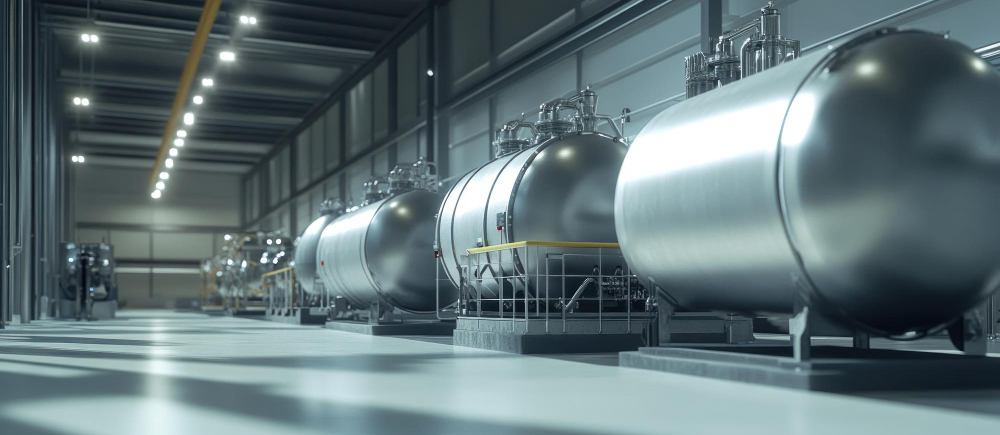
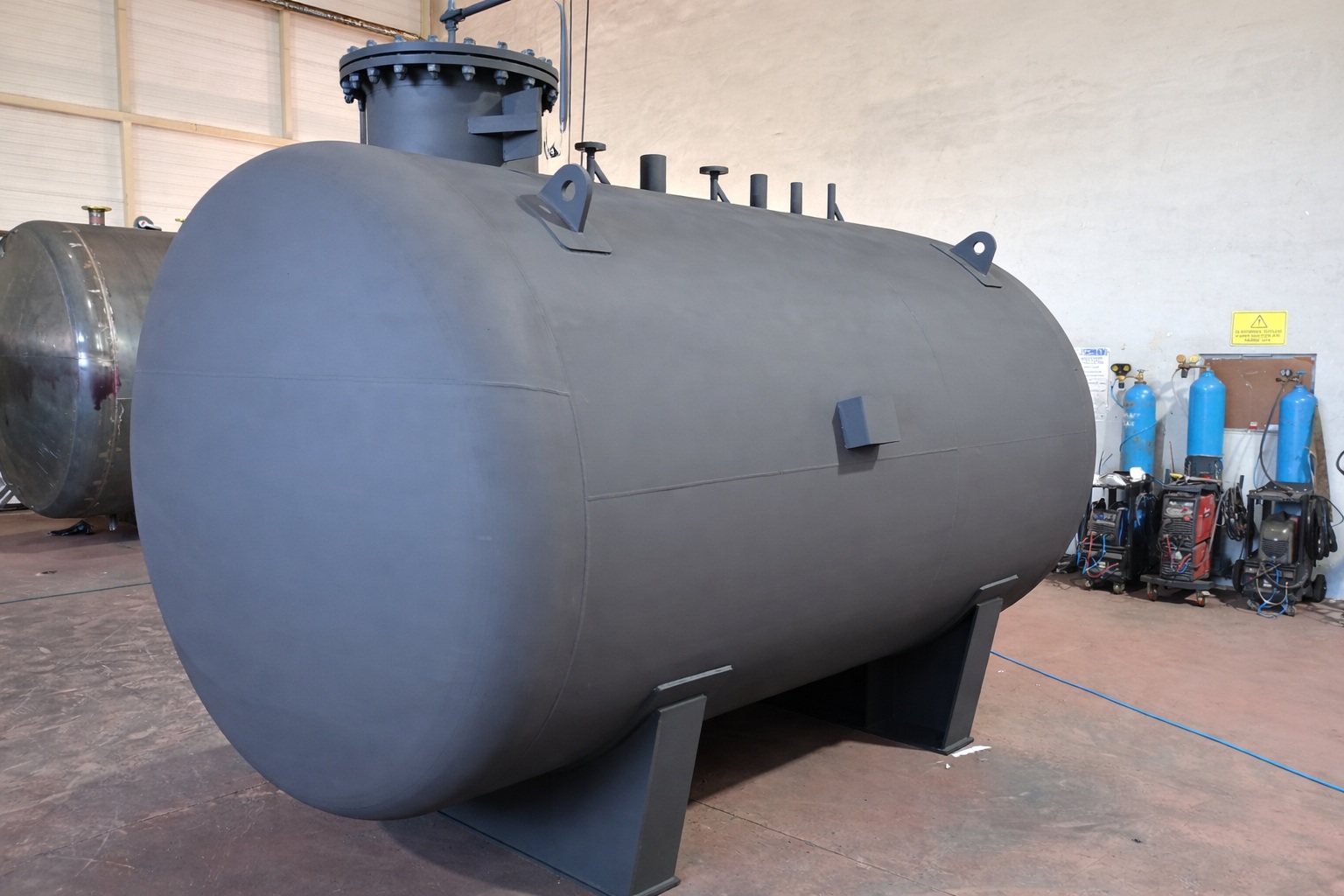
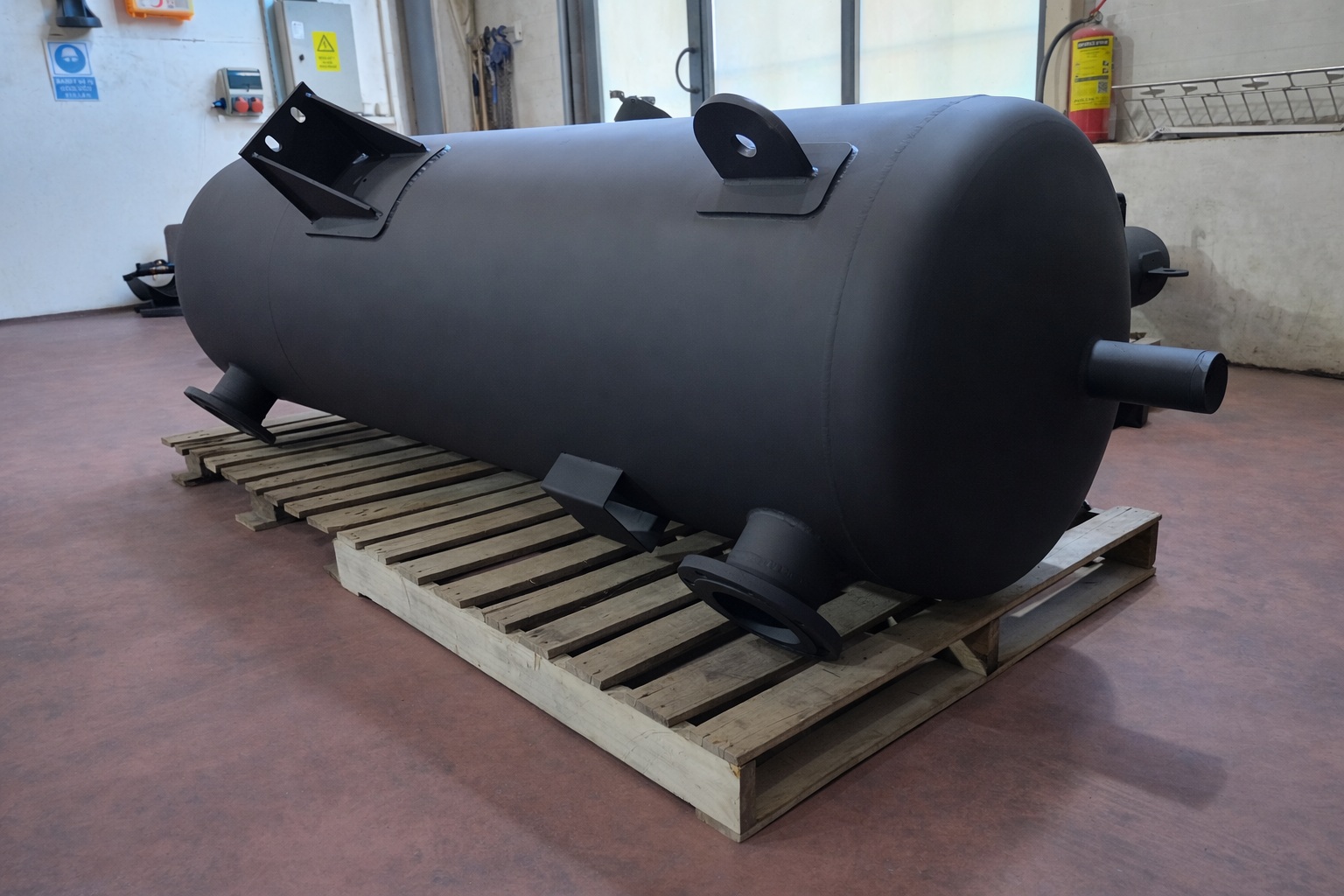
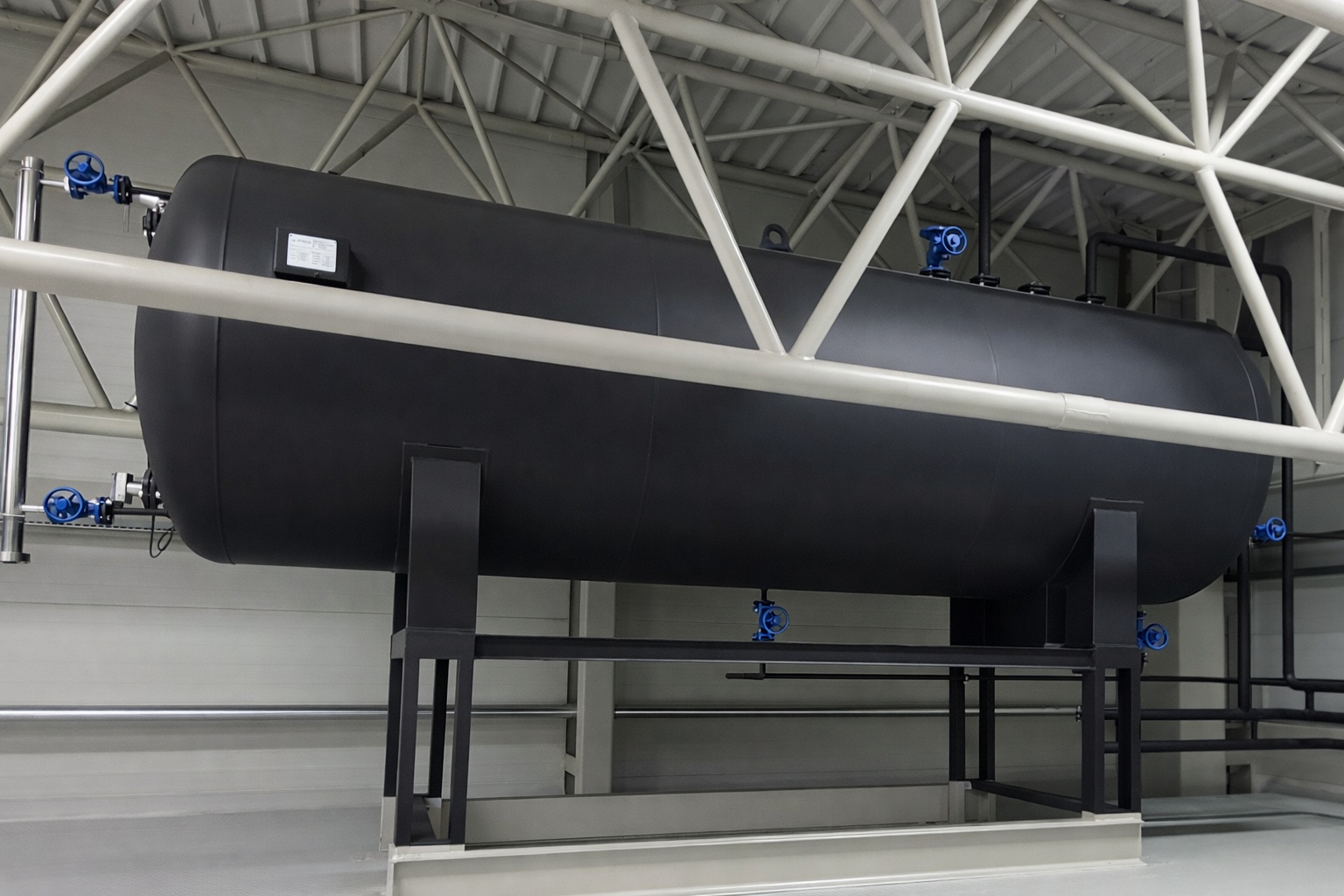
Horizontal Pressure Vessels
- Facilities with limited height
- High-volume storage requirements
- Applications requiring stability
- Commonly preferred for ease of maintenance and operation
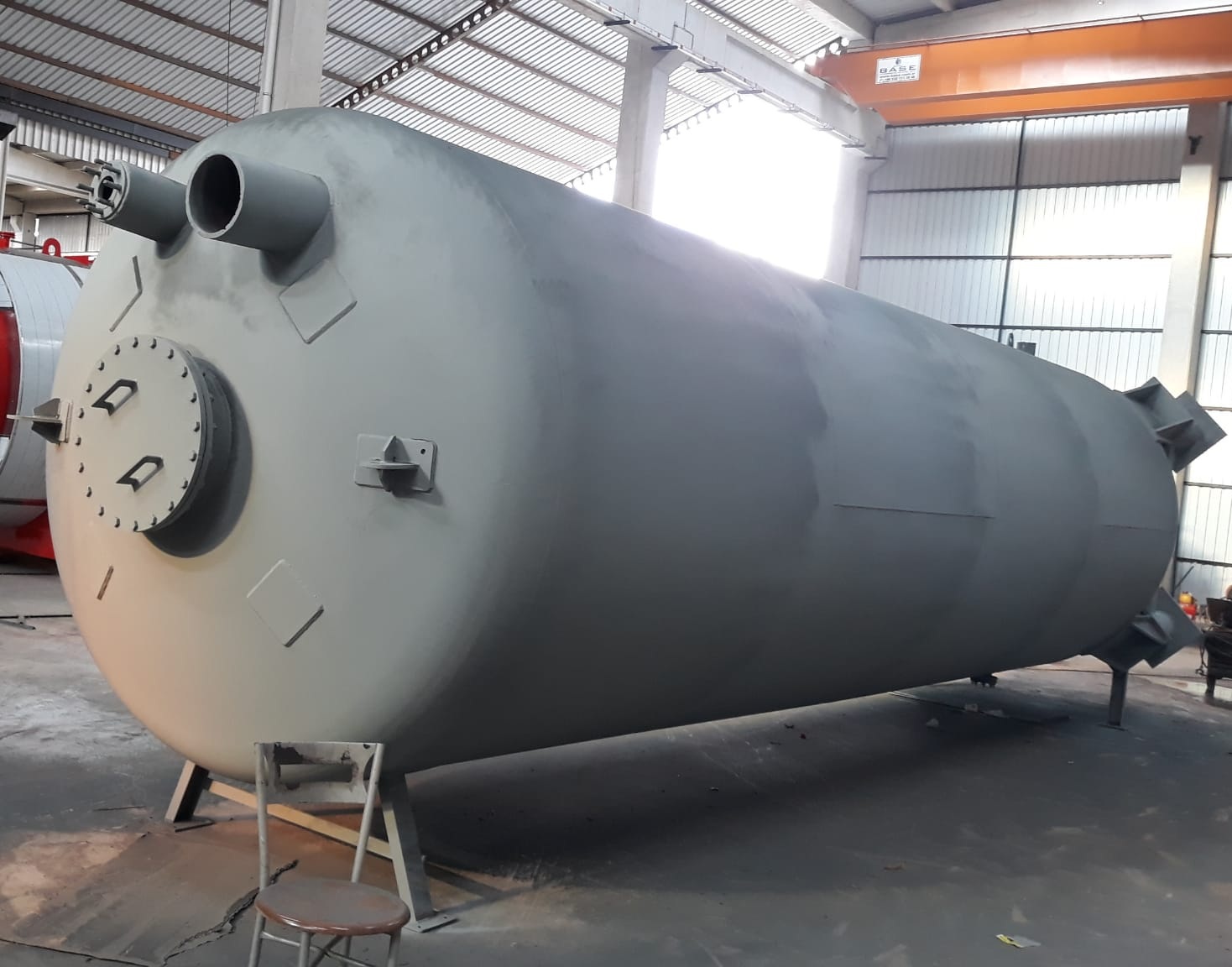
Vertical Pressure Vessels
- Facilities with space constraints
- Low footprint requirements
- Applications requiring process integration
- Offer compact and efficient solutions
ENEVA pressure vessels are developed entirely on a project basis through the following engineering steps:
- Mechanical calculations based on design pressure and temperature
- Cylindrical shell, head, and nozzle optimization
- Material selection based on application (corrosion, temperature, fluid type)
- Welded manufacturing procedures (WPS / WPQR)
- Non-destructive testing (RT, UT, PT, MT) planning
- Third-party inspection when required
- Design in accordance with EN 13445, AD 2000, or ASME Sec. VIII
- Compliance with PED 2014/68/EU and CE
- Manhole / Handhole
- Drain and vent connections
- Lifting lugs
- Nameplate and technical documentation
Optional:
- Safety valve
- Level indicator
- Pressure and temperature instrumentation
- Insulation, sandblasting, and painting
Let’s Start Safety from Design
Let’s design the pressure vessel solution suitable for your process together with ENEVA engineering, in full compliance with standards.
Let’s Evaluate Your Project